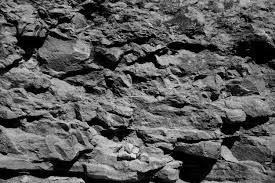
Brick Studies
Year: 2023
Media: Digital graphics
Skills: 3D Modelling, Visual Coding, Rendering
Through this exercise, I developed an automated method for translating image data into detailed three-dimensional brick-laying plans. I wrote this script in Grasshopper for Rhino 3D. Using this process, geometry that would be painstaking to model manually appears with a few simple clicks.
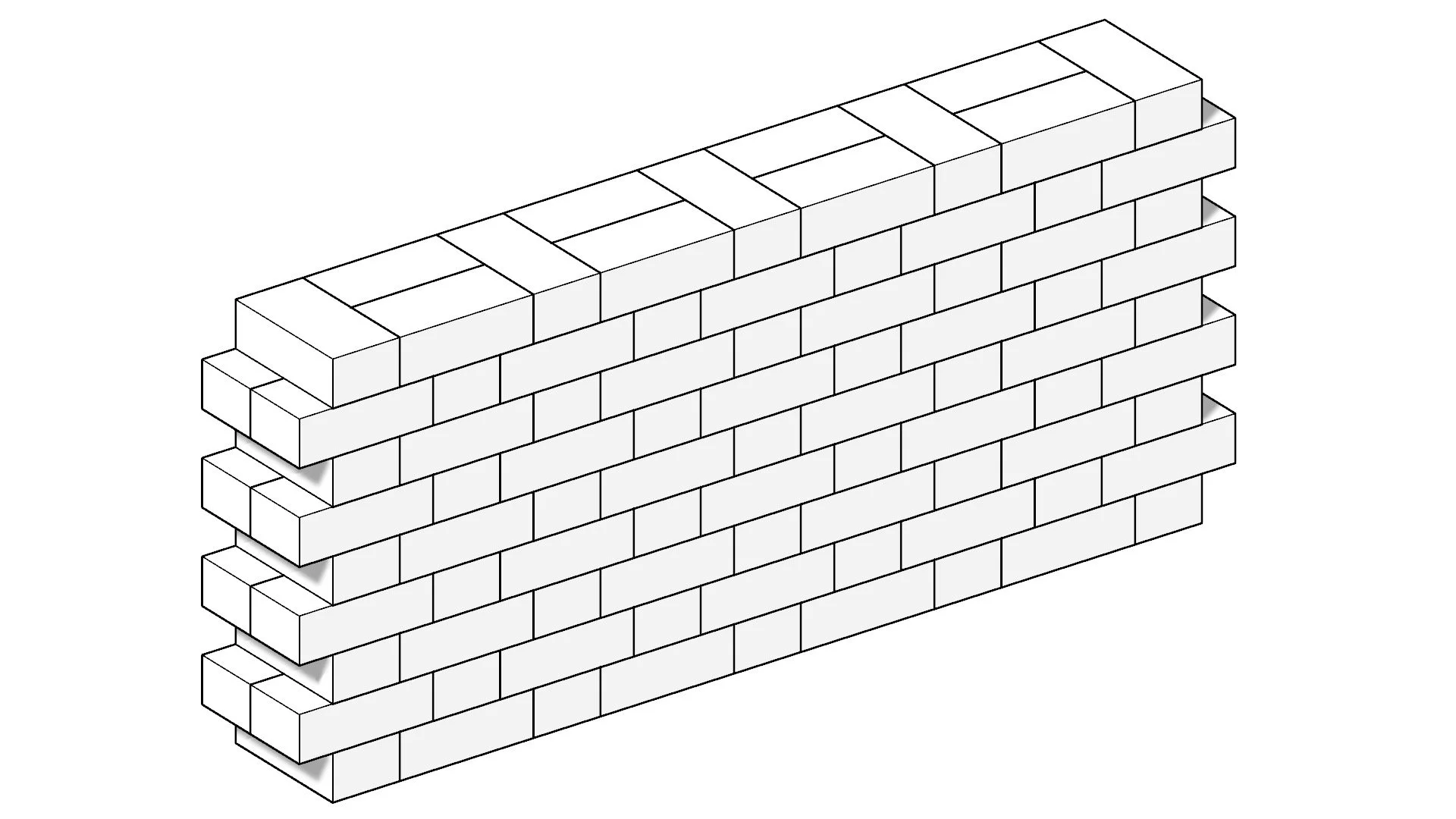
Flemish bond brick pattern
A common brickwork pattern, using just one size of brick, but with varied orientations
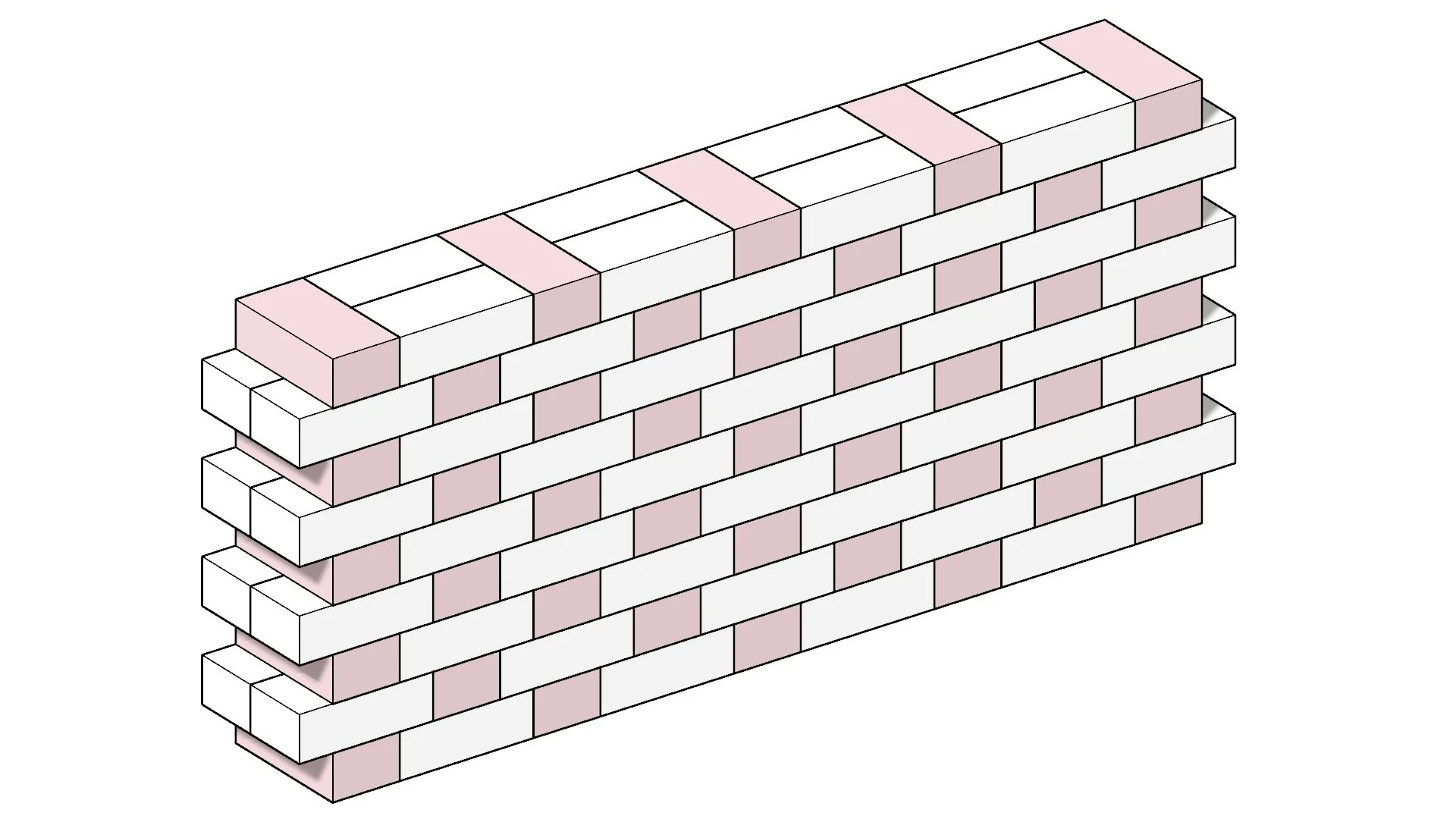
Header bricks
Bricks oriented with their short ends facing outward
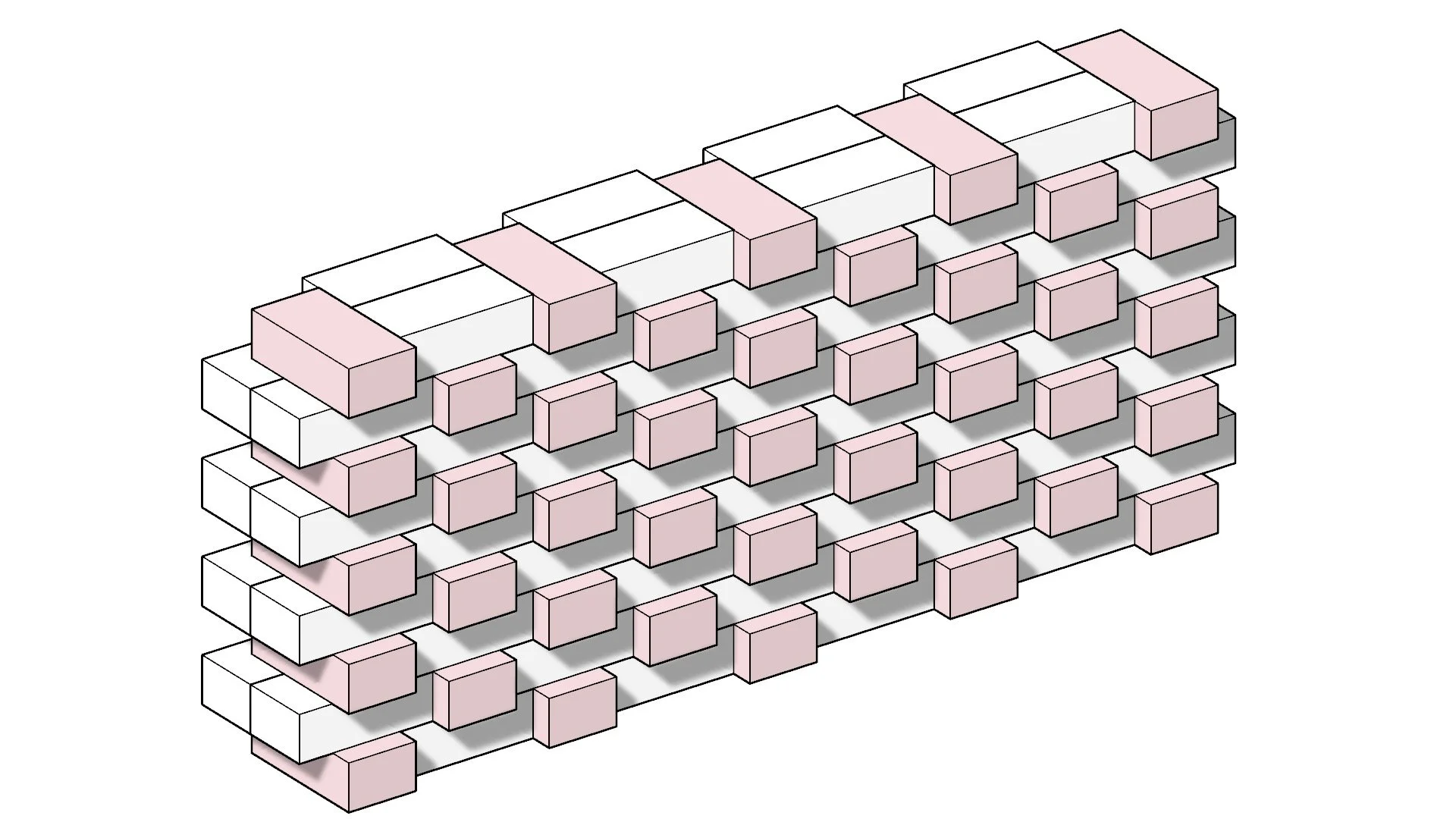
Displaced header bricks
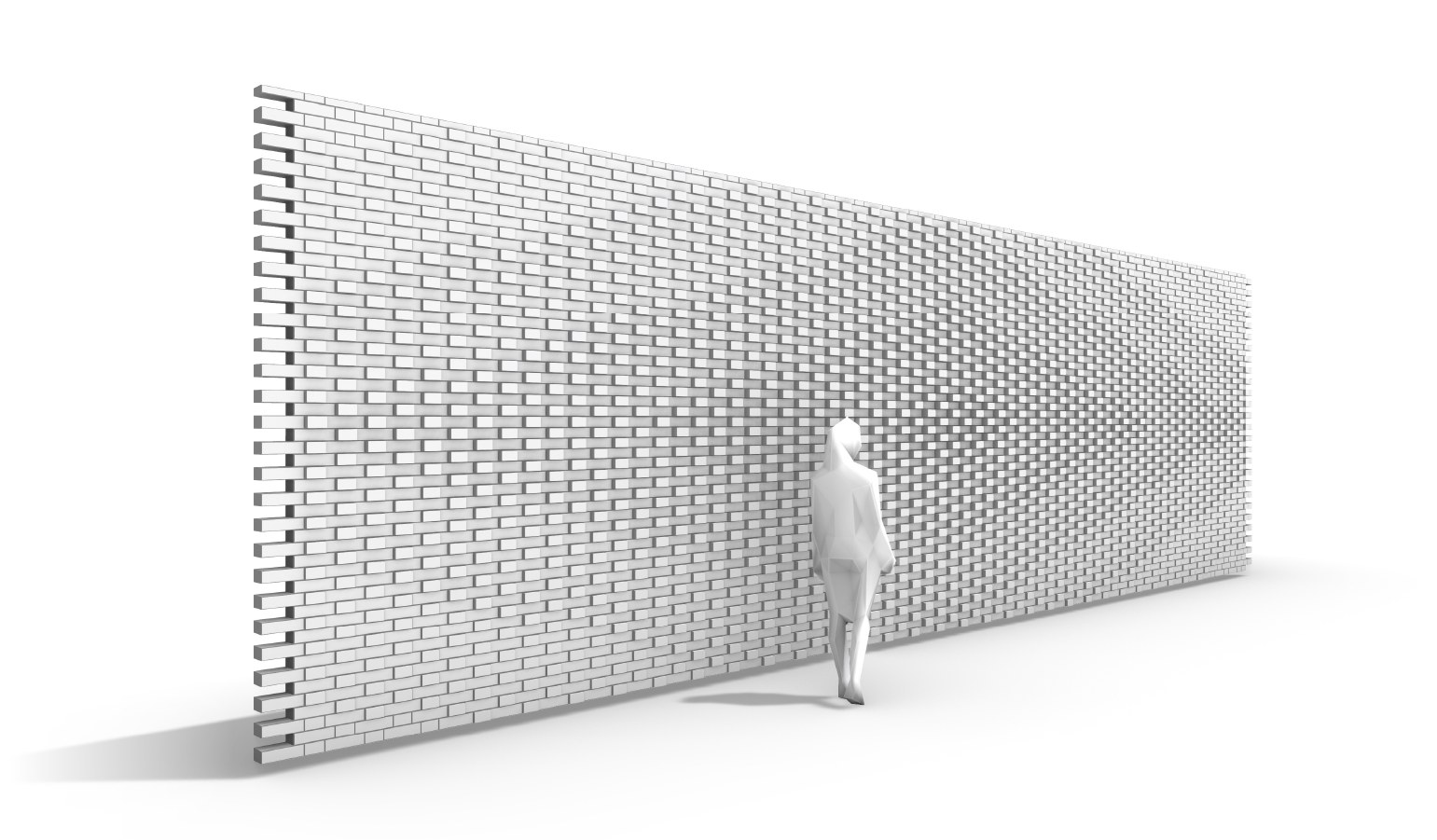
By pushing the header bricks outward, even just slightly, we can achieve a sense of texture and depth. The shadows cast by the displaced bricks allow some areas of a wall face to read as darker than others, even if the bricks are all of the same colour.
Data-driven textures
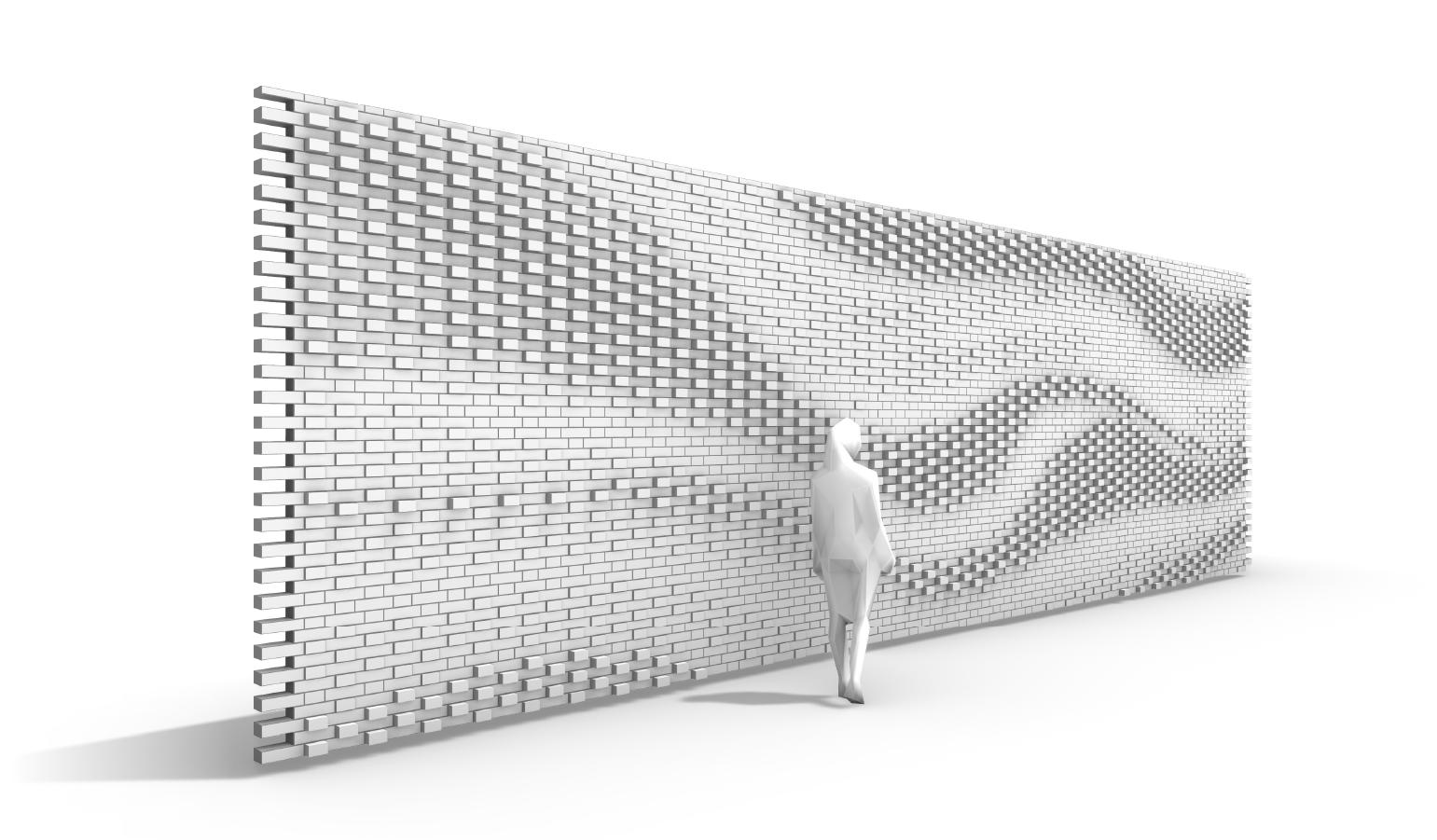
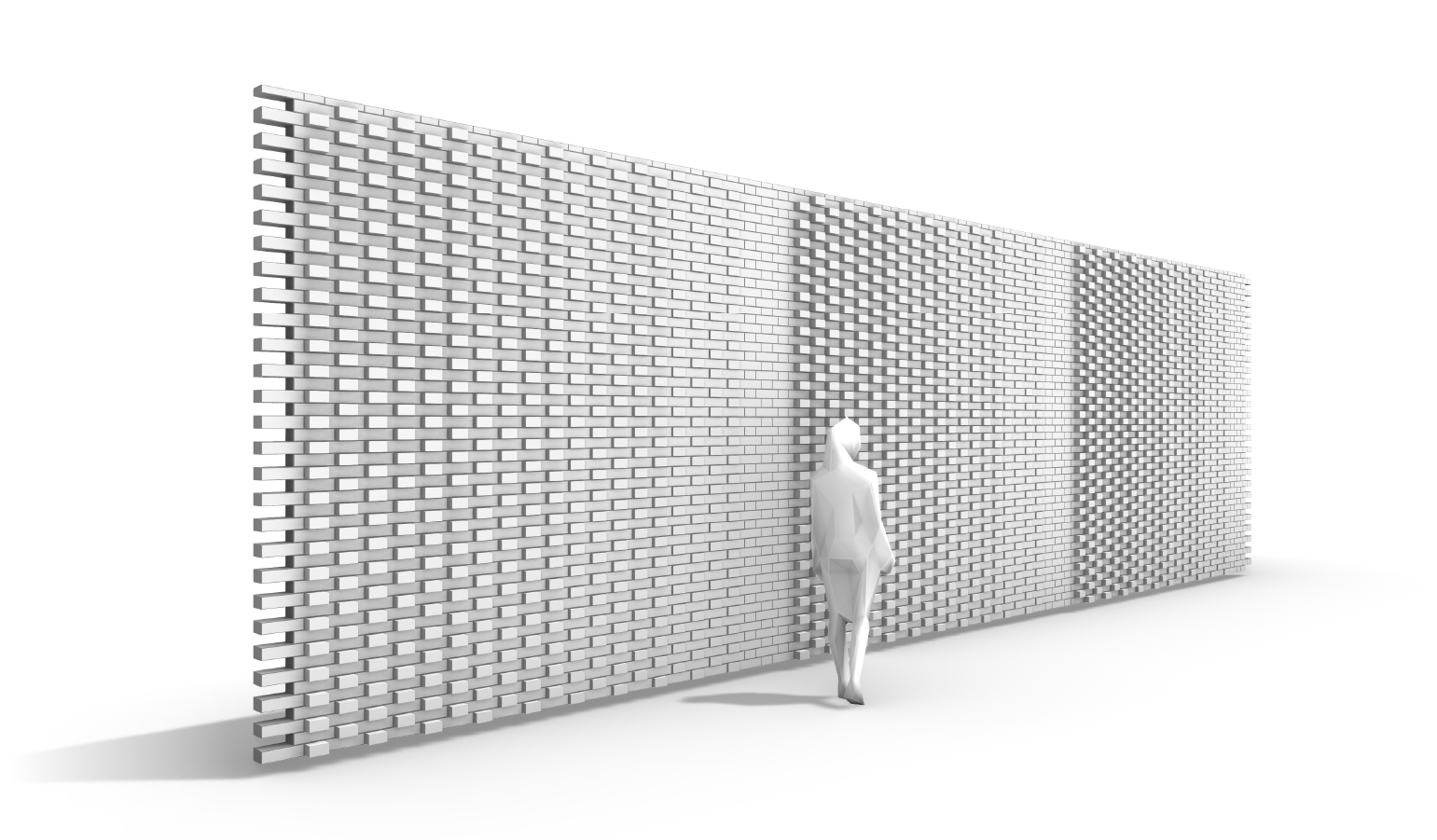
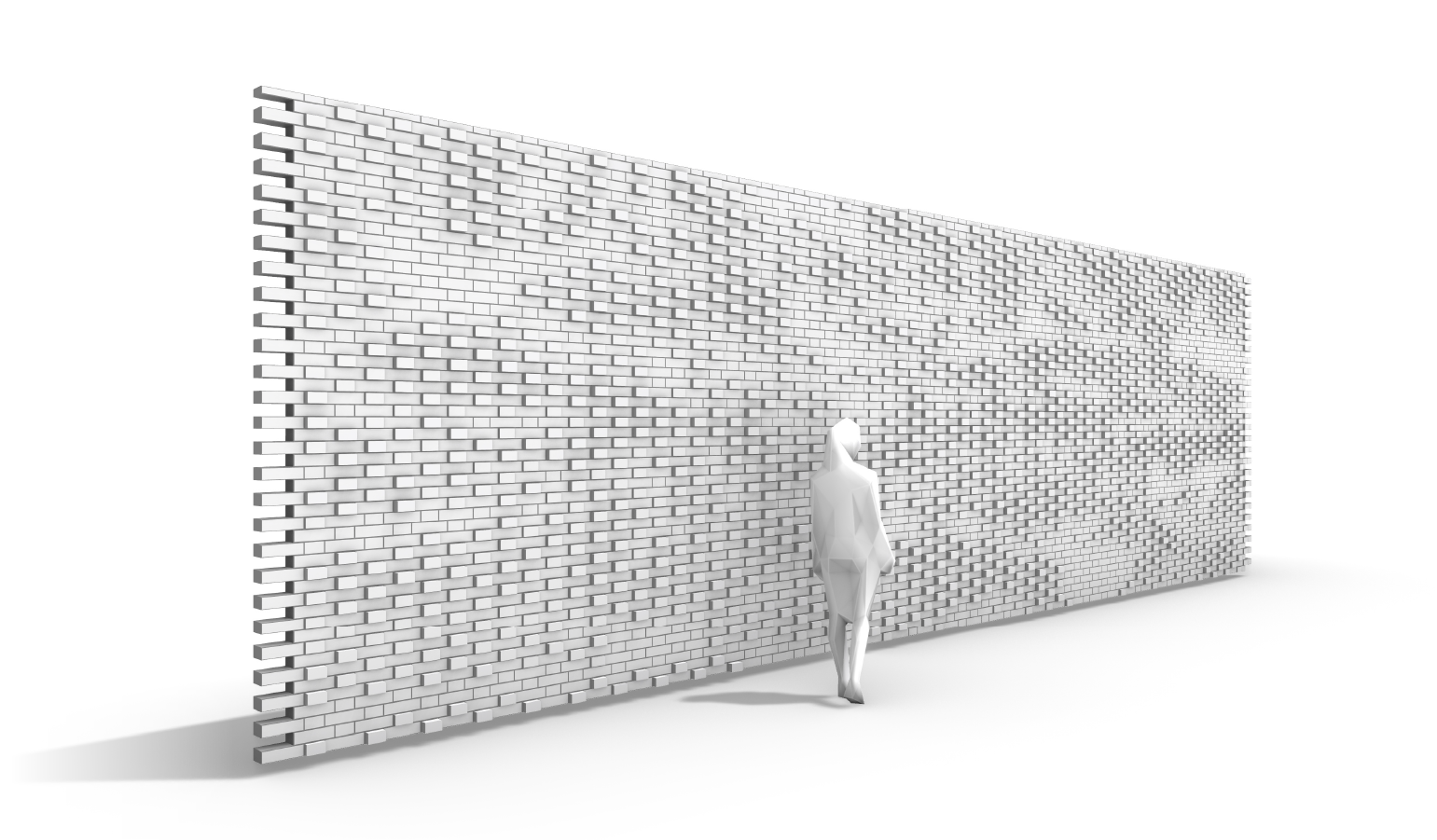
The brightness values of the input images drive the extent to which the header bricks are displaced. In the following examples, the lightest areas or displaced the most while the darkest areas do not displace at all.
Any image will work—from gradients to graphic patterns to photographs—but results may vary. The bricks act like large pixels, abstracting the original image, and often creating unexpected effects through the interplay of light and shadow.