Ebonized Oak Coffee Table
Year: 2009
Media: Solid oak, vinegar, rusty nails
Skills: Technical drawing, scaled model-making, wood-working
I designed and built this coffee table entirely from scratch. The process began with open-minded exploration, continued through meticulous planning, and concluded with an experiment in reckless chemical abandon.
Ideation
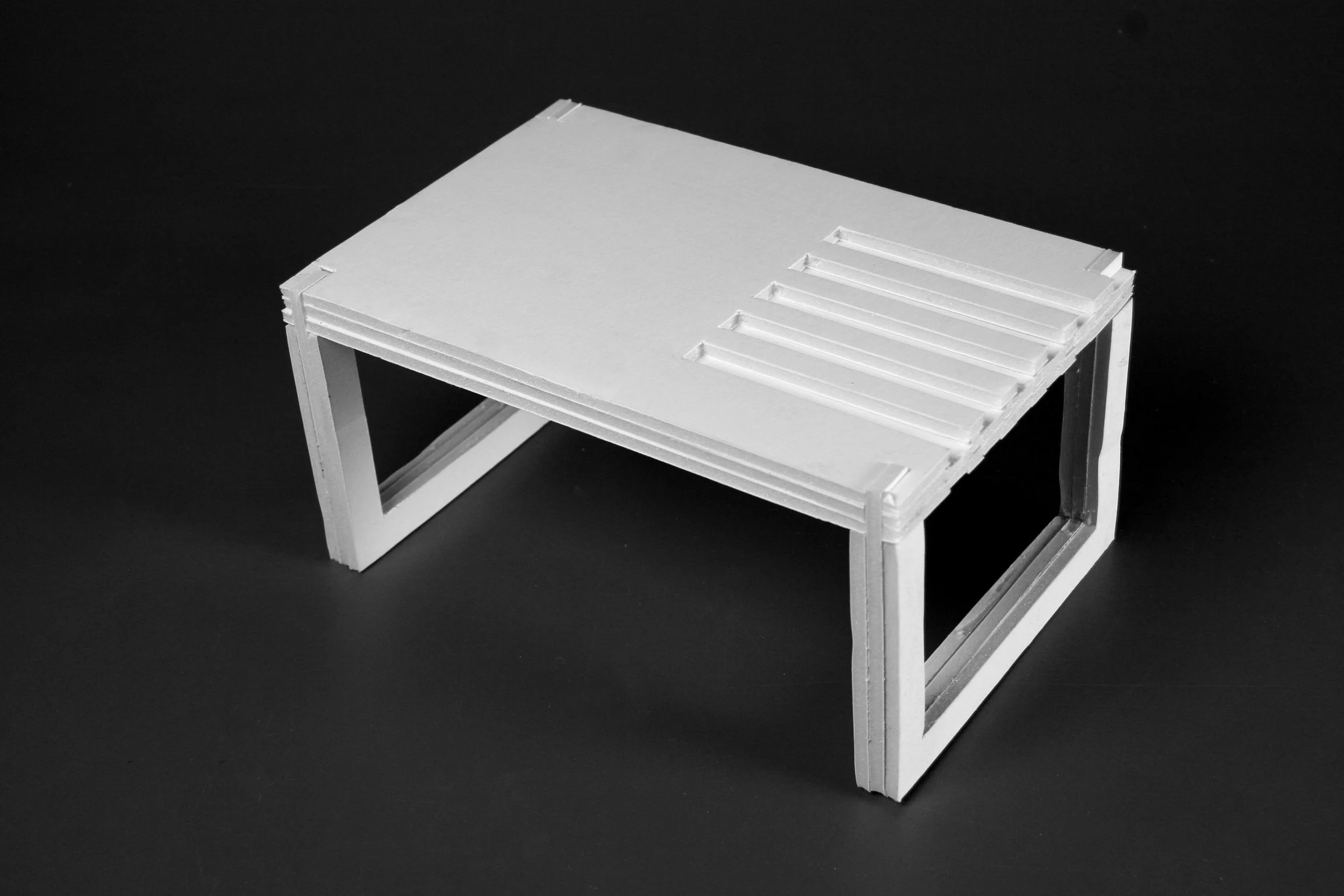
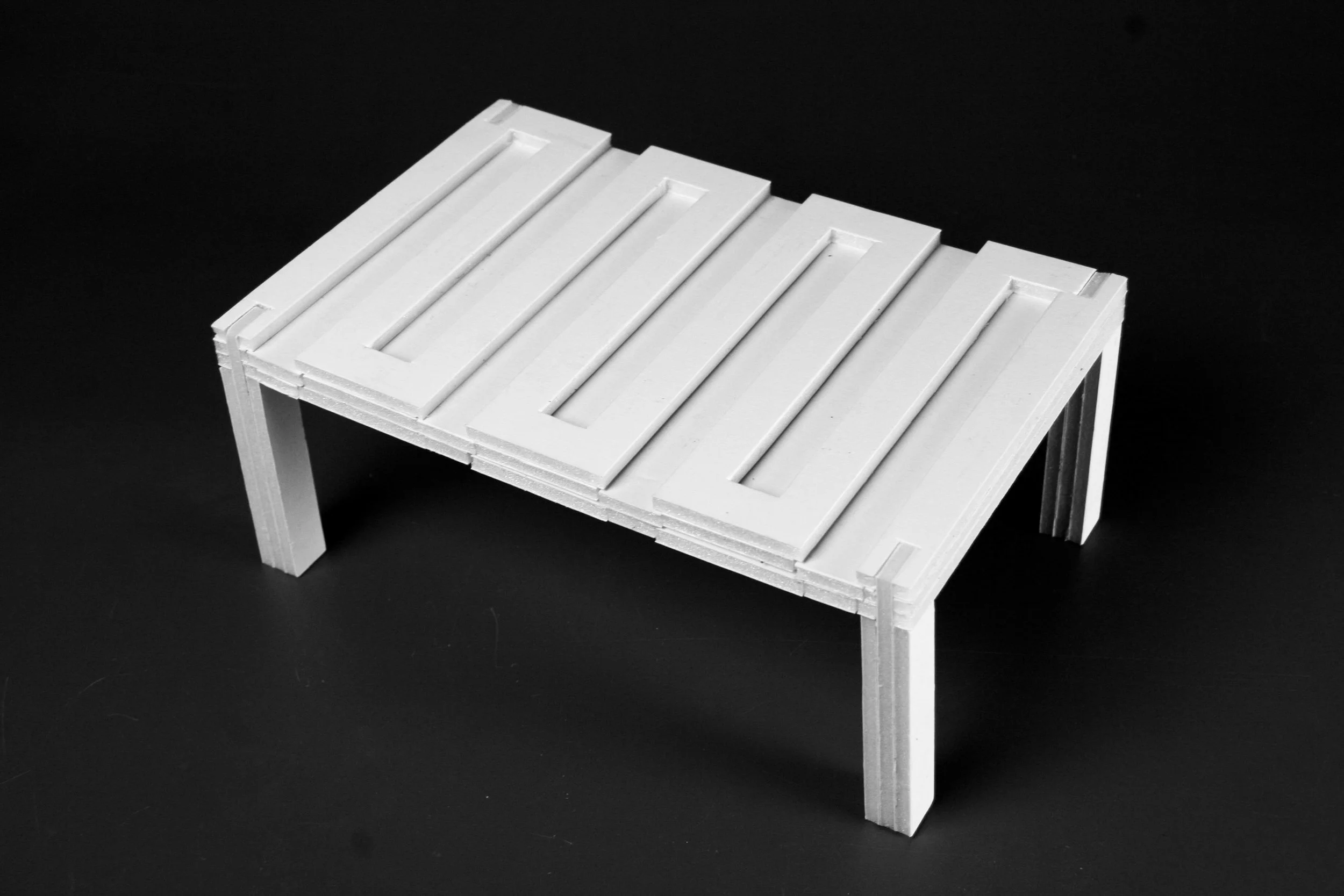
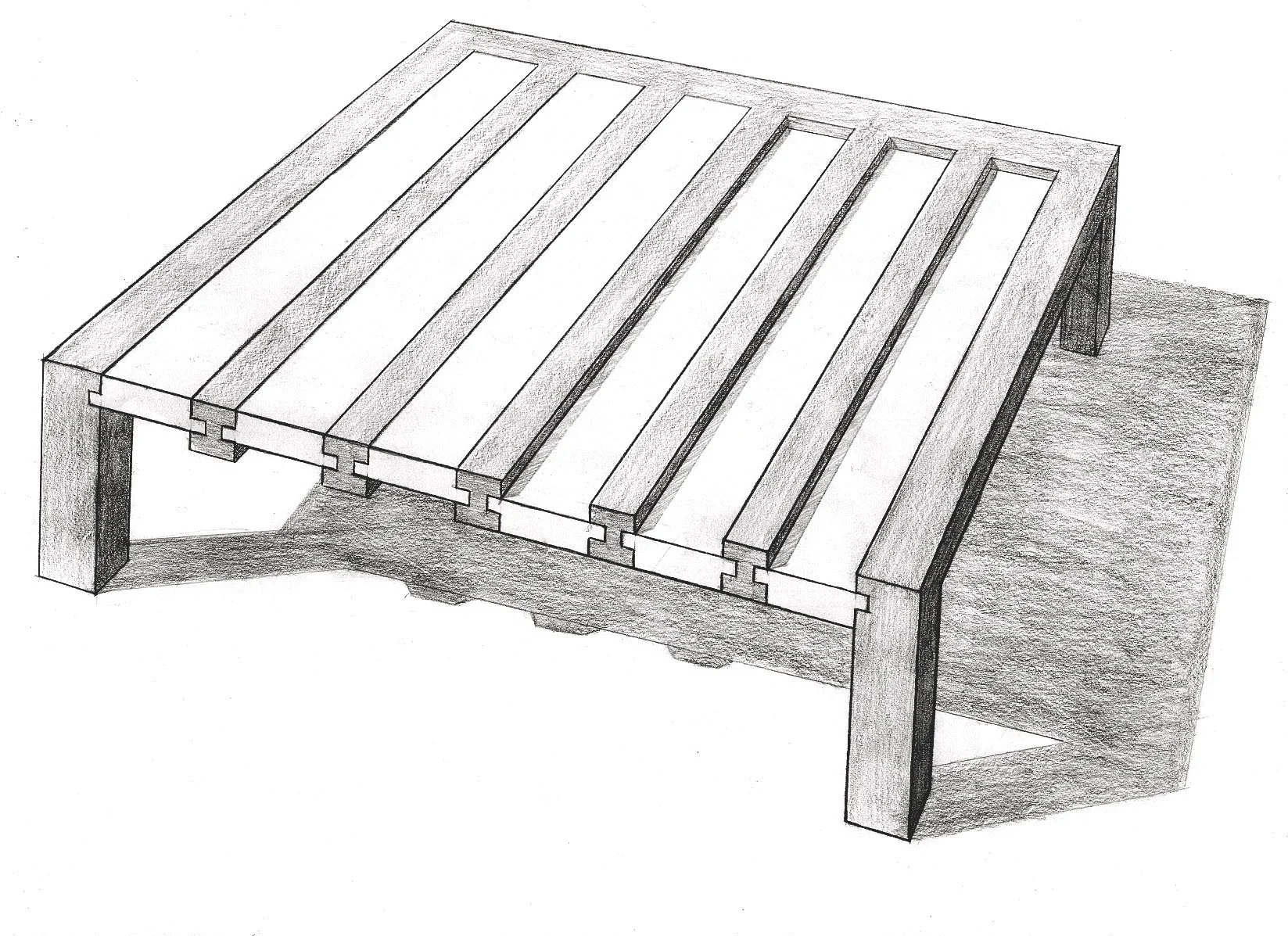
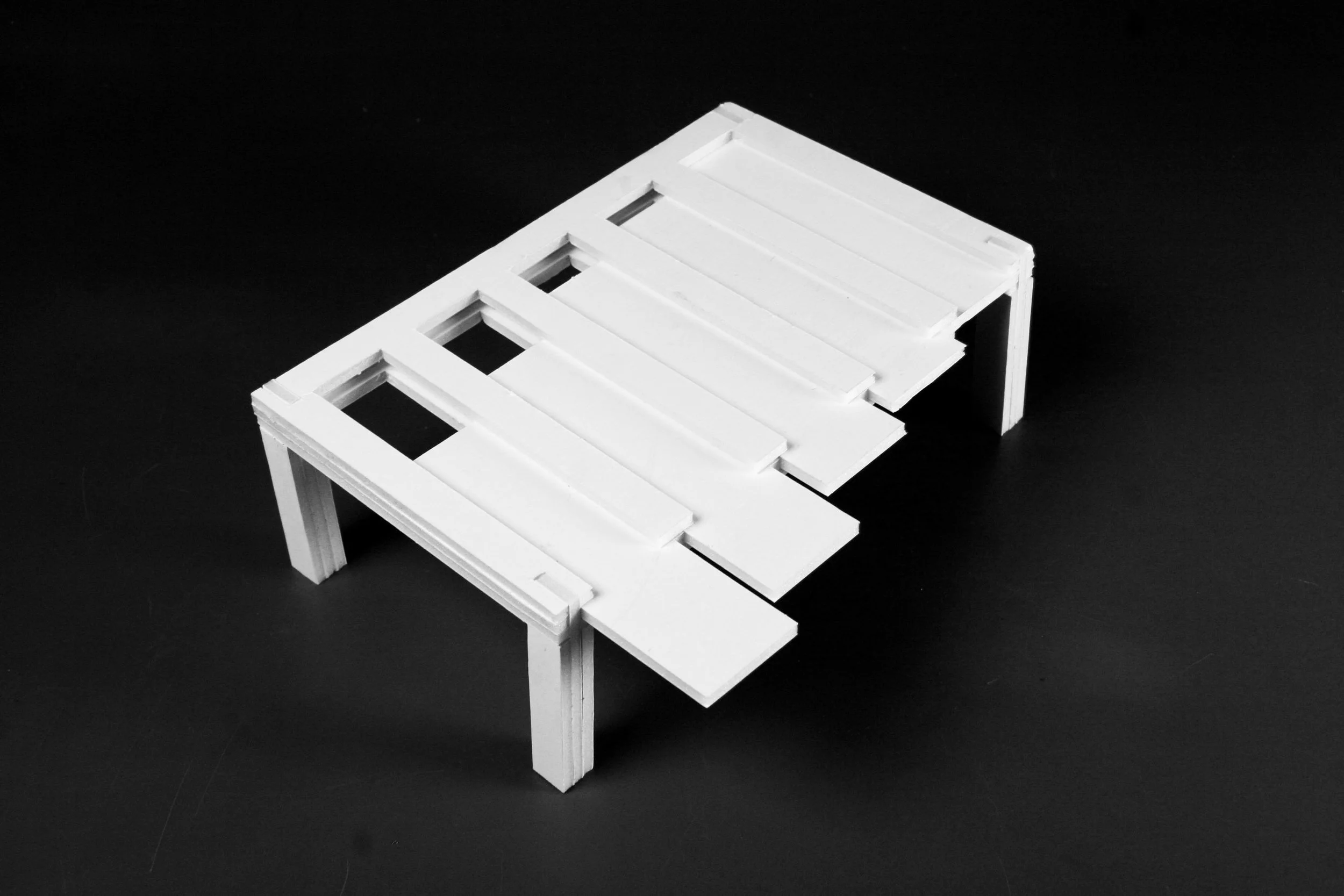
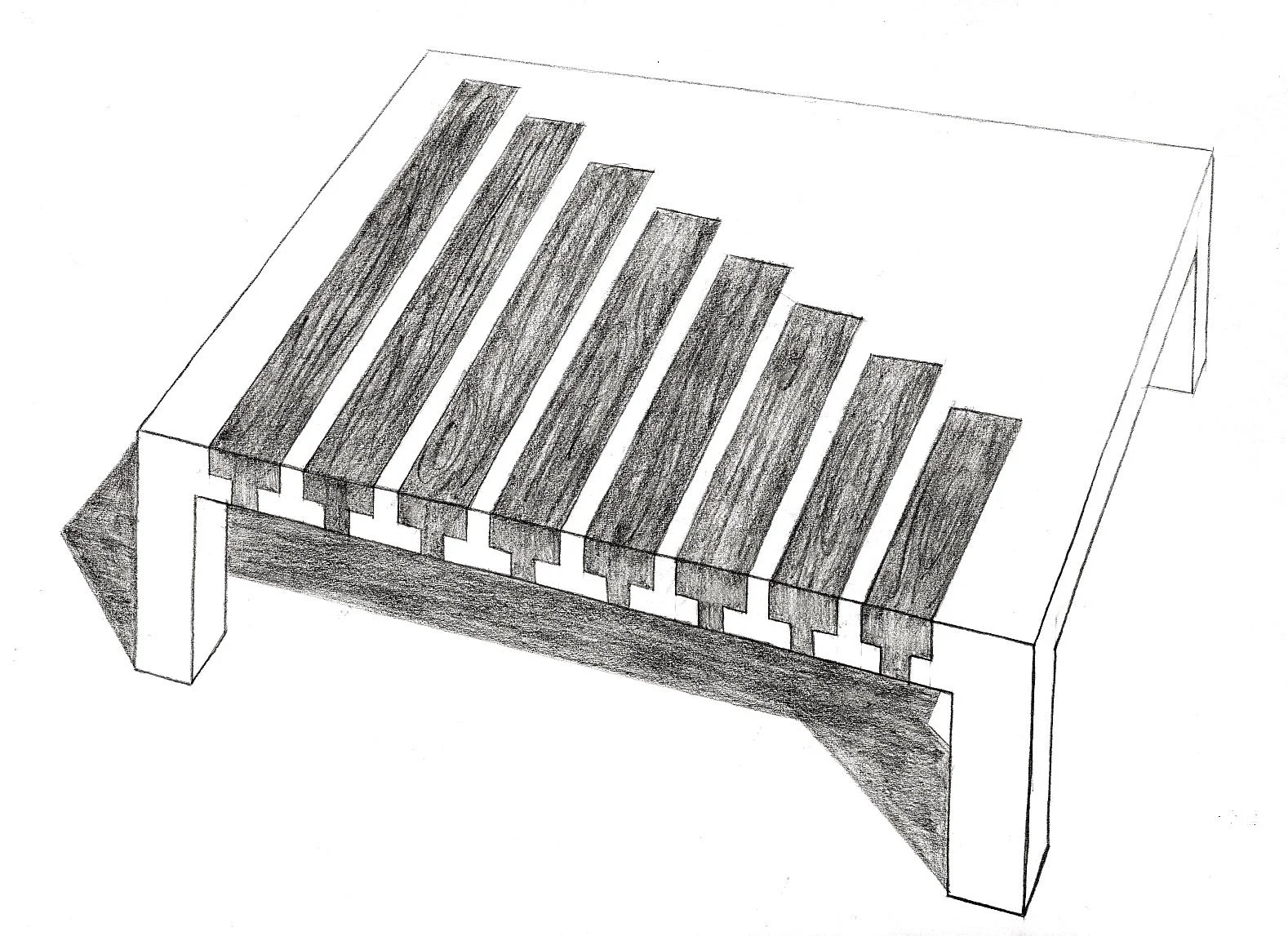
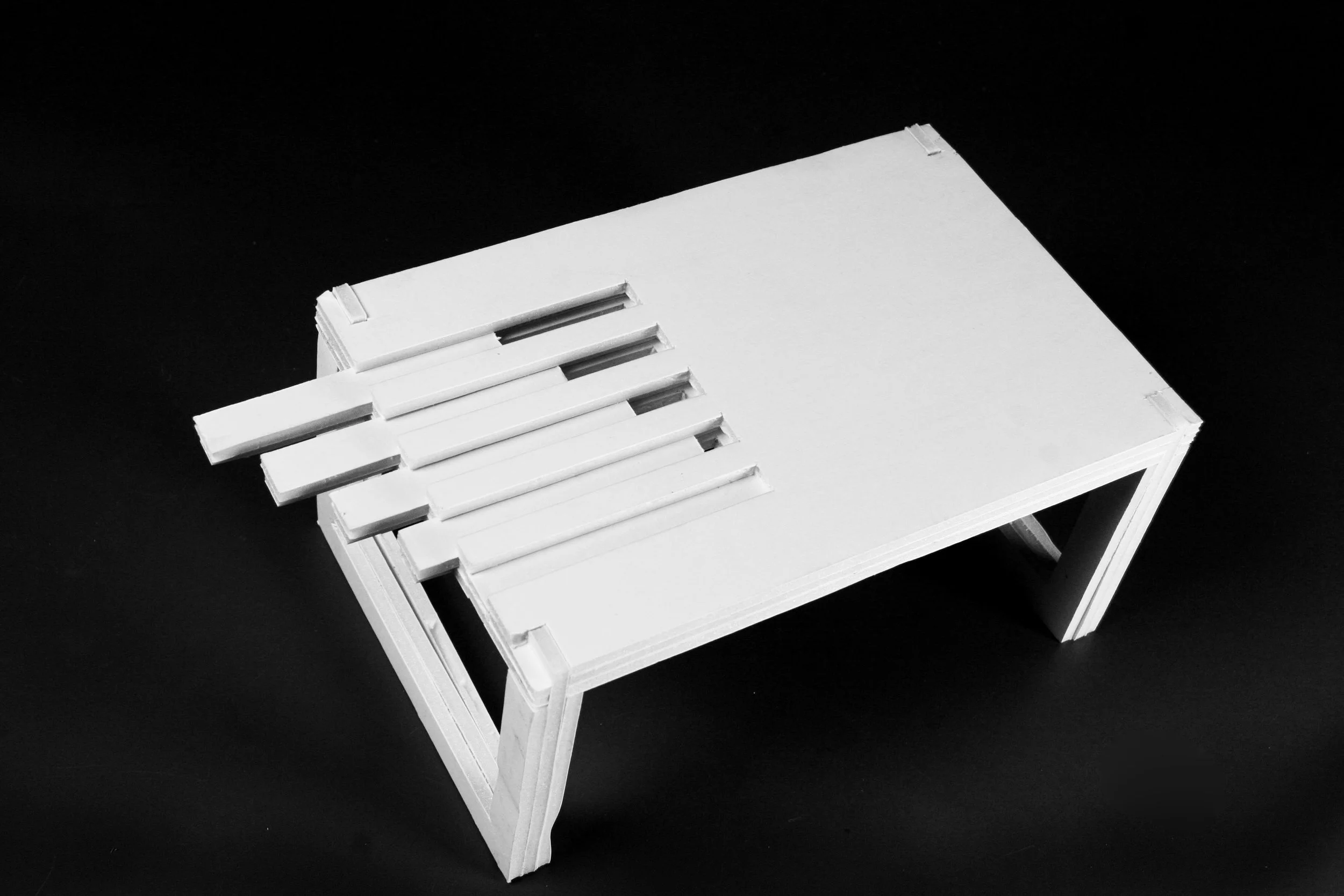
I began with the idea of a coffee table with slats that could slide in and out of place. When in place, the slats would form a continuous flat surface. When removed, the slats would leave spaces for magazines and newspapers to hang. I considered several different configurations, shapes, sizes, and numbers of slats and explored these options in a series of drawings and sketch models.

Design
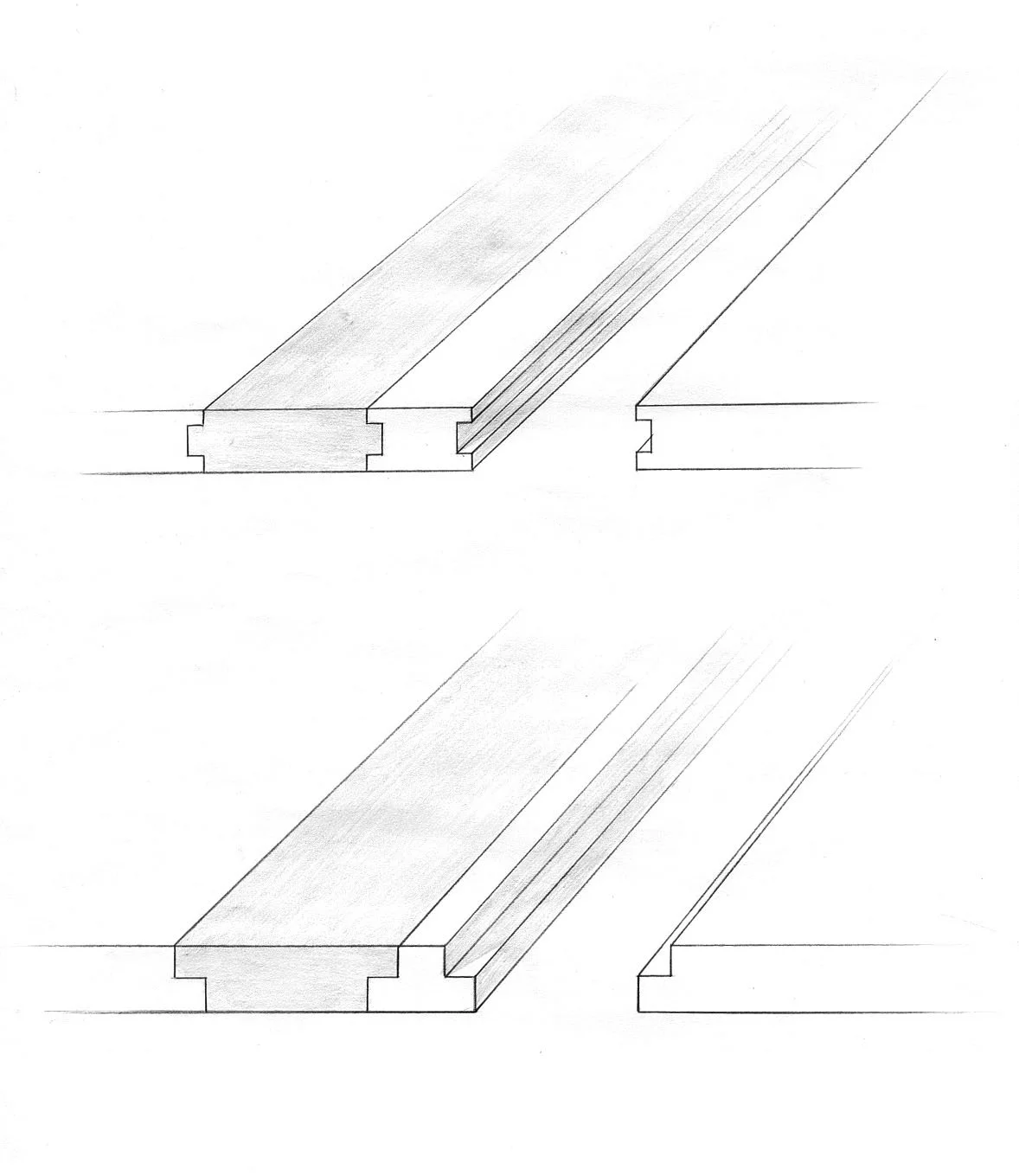
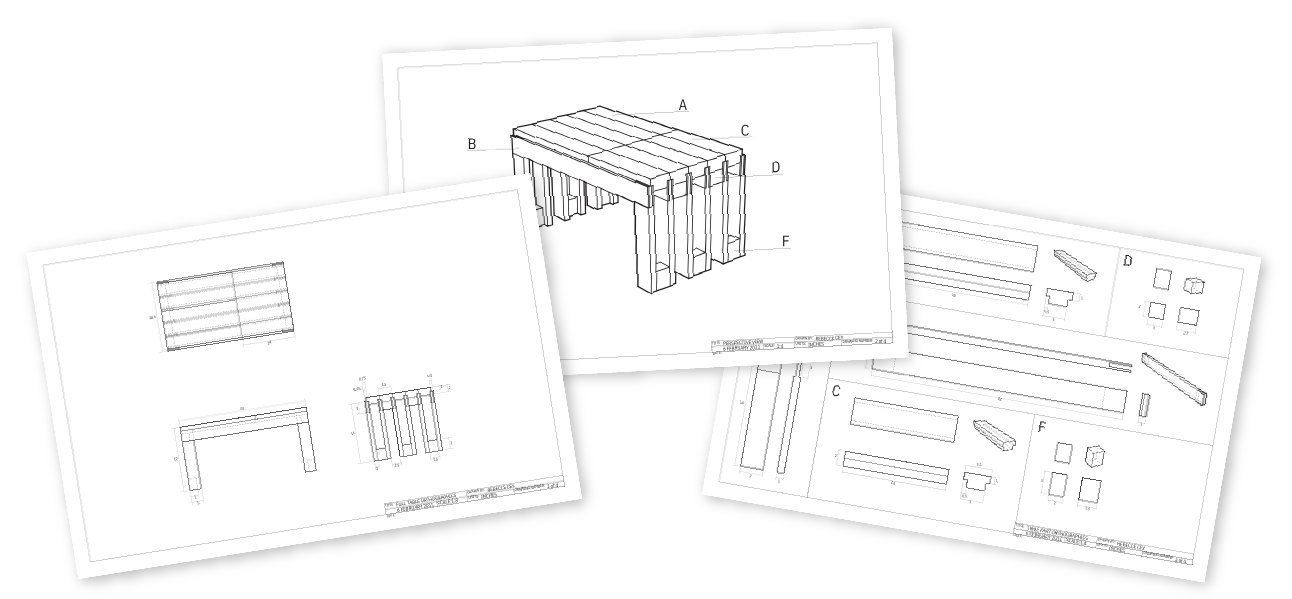
The finalised form is a six-legged table made of 41 separate solid wood pieces, connected by tongue-and-groove joints and glue. It has five removable slats of the same shape and size. These slats are interchangeable and slide into grooves on the upper side of the table. The rest of the table top surface consists of the same type of slats, but glued in place so they are not removable.
Experimentation
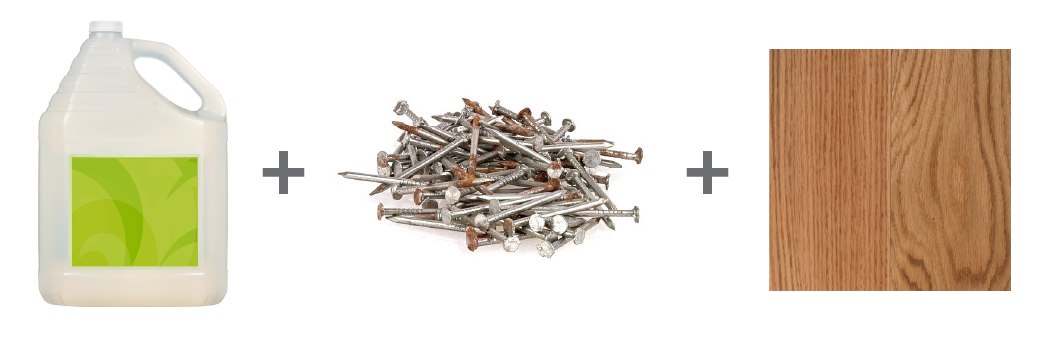
Rather than using paint or stain to finish the table, I experimented with a technique called ebonization, which chemically alters the wood’s surface, turning it a darker colour. For the process to work, the wood needs to contain a naturally occurring chemical called tannin, so I constructed the table out of red oak, which has naturally high tannin levels. The other chemical required is iron acetate, which I created by soaking several rusty nails in vinegar for a week.
Before ebonizationafter ebonizationResults
After the table was completely assembled, I brushed the solution over its surfaces and hoped for the best. Within minutes, it turned a satisfyingly dark, brown-black colour.